There are certain comforting constants in British life.
It will rain approximately seven minutes after you put the barbecue away.
A replacement bus service will involve neither replacement nor service.
As Britain collectively sweats through its clothes, some fool will inevitably pipe up: “It’s not the heat, it’s the humidity,” despite having no more idea what humidity is than the Labrador next door.
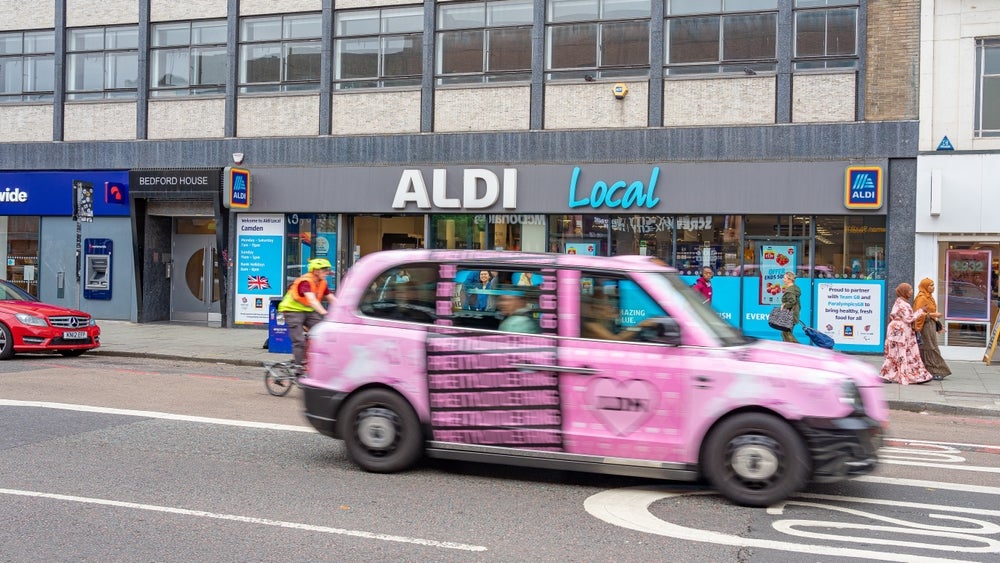
And Aldi will be named Britain’s cheapest supermarket.
Please try to look surprised.
Yes, the latest Which? supermarket price comparison is in, and Aldi has once again wandered onto the top step of the podium, accepted the imaginary gold medal, muttered “job done” and gone back to rearranging the Red Bag Chicken, Choceur Peanut Butter Cups and PurAqua Belle Vie Sparkling Water — all of which sound like products named by someone who was given five minutes to make them sound European and decided nobody would check.
Meanwhile, somewhere in Aldi Specialbuys, a perfectly innocent shopper is wondering when exactly he became the sort of person who needs a chainsaw.
Which? compared the average cost of 93 groceries during July.
At Aldi, the lot came to £158.05.
Lidl came second at £160.70, just £2.65 behind.
That is irritatingly close. The sort of margin where Lidl can spend the entire month wandering around headquarters muttering:
“Two pounds sixty-five.”
“Where the hell are we losing two pounds sixty-five?”
Then comes Asda at £185.81.
The £25.11 gap between Lidl and Asda is less a price difference than the financial equivalent of Harrison Ford taking a running jump across a massive chasm in Indiana Jones.
Except the chasm is £25.11.
And then things get really British.
Sainsbury’s shoppers with a Nectar card paid £187.86.
Tesco customers with a Clubcard paid £188.45.
The difference?
59p.
Fifty-nine pence.
Two of Britain’s biggest supermarkets have built enormous loyalty ecosystems, developed sophisticated apps, accumulated vast quantities of customer data and trained millions of shoppers to scan little bits of plastic at the checkout – only to end up separated by roughly the price of a Freddo.
Assuming Freddos continue their current trajectory towards becoming an investable asset class.
There were 48 loyalty discounts in the Which? July basket: 25 at Sainsbury’s and 23 at Tesco.
Grocery shopping increasingly resembles a low-budget airline.
There is a price.
But your price depends on whether you have registered, remembered your password, activated the offer, scanned the right thing, bought the right quantity, stood on one leg and accepted terms and conditions last updated sometime during the reign of George VI.
By the time you have bought a packet of cheese, you have effectively completed a small government procurement exercise.
Turn up at Tesco without your Clubcard these days and you don’t feel like a customer.
You feel like you have been caught trying to cross a border with suspicious quantities of cheese.
“Clubcard?”
“No.”
“I see.”
Sir, please step away from the meal deal.
Without a Clubcard, the Which? Tesco basket cost £195.63 – exactly the same as Morrisons.
Sainsbury’s without Nectar came to £197.85.
Then came Ocado at £209.40.
And finally, majestically, Waitrose at £226.95.
Waitrose was therefore £68.90 – or 44% – more expensive than Aldi.
Forty-four per cent.
At that point we are no longer discussing a price difference.
We are discussing different economic systems.
The potato has provenance
The Aldi shopper has spent £158.05 and gone home with 93 groceries.
The Waitrose shopper has spent £226.95 and, presumably, been introduced to the person who personally selected the leeks.
The Aldi potato is a potato.
The Waitrose potato has provenance.
It has a backstory.
It went to university.
It has strong views about architecture.
The carrots attended finishing school.
The broccoli has a trust fund.
The sourdough has a podcast.
The hummus has been to Tuscany.
The olive oil is “small batch”, which is apparently a phrase that now requires another £4.50.
The asparagus can cook your breakfast, make your bed and quietly adjust the thermostat to a tasteful 20°C while reverently asking whether madam slept well.
There is no evidence for any of this, obviously.
But for £68.90 extra, there should at least be a reggae band by the self-checkout singing Everything’s Gonna Be Alright while a man in a linen jacket gently assures you that, yes, £7.50 for olive oil is perfectly normal — and not to worry about the small stroke you’ve just had.
It has become one of retail’s great recurring sporting events.
Aldi wins.
Lidl comes second.
The traditional supermarkets fight among themselves like three dads trying to reverse caravans into adjacent pitches.
Waitrose arrives some time later wearing a linen jacket and carrying focaccia.
There is polite applause.
Nobody asks what happened.
Please continue looking surprised.
Everyone wants to be Aldi. Good luck with that
The awkward bit for Aldi’s rivals, however, is that beneath the comedy lies a serious retail problem.
Everyone knows Aldi is cheaper.
Your mum knows Aldi is cheaper.
Your neighbour knows Aldi is cheaper.
Your neighbour’s cockapoo probably knows Aldi is cheaper.
Aldi has spent years turning “cheap” from a temporary promotion into an entire personality.
That is enormously difficult for established supermarkets to copy.
You don’t run 100 metres in 9.58 seconds simply by copying Usain Bolt’s pose before the starter gun.
The pose is the easy bit.
There are several rather important seconds before it.
Tesco can offer Clubcard Prices.
Sainsbury’s can offer Nectar Prices.
Morrisons has More.
There can be price matching, personalised discounts, app-only deals and whatever new piece of retail witchcraft is currently being tested on unsuspecting shoppers.
But every additional mechanism creates another question for the customer.
Is it £4?
£3 with the card?
£2.75 if I buy two?
Does it earn points?
Have I activated the points?
Where are the points?
Why has the app logged me out?
Why does the app need Bluetooth?
Why does buying cheddar now require the administrative skills of a regional payroll manager?
At some point you begin to suspect that the cheese is not discounted at all.
You have simply been promoted to middle management.
Aldi’s proposition remains gloriously uncomplicated.
Come in.
Things are cheap.
Also, would you like a gazebo?
And this is Aldi’s other extraordinary achievement.
You can enter intending to buy milk and emerge 23 minutes later with German biscuits, thermal leggings, a pressure washer and an inflatable kayak.
You do not own a kayak.
You live in Wolverhampton.
You have never been kayaking.
You do not know anyone who has been kayaking.
Yet somehow you are standing in the car park looking at it and thinking:
“£39.99.”
“Absolute bargain.”
The middle aisle may be the only place in British retail where a customer’s mission can change from “buy dinner” to “begin amateur beekeeping” in under four minutes.
You went in for bread.
You came out with a cordless drill.
You already own two cordless drills.
You cannot remember where either of them is.
Aldi has not merely sold you another drill.
It has sold you the idea that you are now the sort of person who needs three drills.
This is not a supermarket.
It is a test of character.
Somewhere between the washing-up liquid and the frozen peas, you have acquired a soldering iron and a plan to build a greenhouse.
And yet, beneath all this glorious chaos, Aldi has one of the clearest value propositions in British retail.
Cheap.
No password.
No app.
No loyalty ecosystem.
No need to remember whether you activated the offer.
Just cheap.
That simplicity has enormous value in itself.
There are, of course, caveats to the Which? comparison.
It covers a defined basket rather than everything sold by every supermarket, and different households buy different things. Range, quality, convenience, location and availability all matter too.
In other words, if you live three miles from Aldi and seven minutes from Waitrose, this is not a mathematical instruction to abandon your car and begin walking to Aldi.
But here is the awkward bit for Aldi’s competitors.
The numbers keep reinforcing the perception.
Aldi was cheapest in January.
Then February.
Then March.
Then April.
Then May.
Then June.
And July.
Seven months.
Seven wins.
At this point, Which? could probably save everyone some time.
“Aldi?”
“Yes.”
“Cheapest?”
“Yes.”
“Anything else?”
“Not really.”
“Excellent. See you in September.”
We are now in August, and the next Which? supermarket price comparison is beginning to feel less like an investigation and more like sending a reporter outside to confirm that gravity remains operational.
Still, for the sake of journalistic rigour:
Britain’s cheapest supermarket revealed
Aldi.
Again?
Yes.
Did you actually check?
Obviously.
And?
Aldi.
Waitrose?
Don’t ask.
Because Aldi winning the supermarket price comparison has ceased to feel like news and become part of the natural rhythm of British life.
Spring brings daffodils.
Summer brings heatwaves, 31°C bedrooms and the annual debate about why British houses do not have air conditioning, after which everyone agrees something must be done before collectively doing absolutely nothing.
Autumn brings leaves.
Winter brings somebody’s dad refusing to put the heating on.
And every month, Aldi looks at the latest price comparison, looks at its competitors and says:
“Yep.”
“Still cheap.”
Please try to look surprised.
Then it goes back to doing what Aldi does best: selling pain au chocolat, washing powder and a six-foot inflatable Santa in the same aisle.
Somewhere nearby, a man who came in for milk is buying a chainsaw.
He has no idea why.
“Absolute bargain.”
He does not own a tree.