

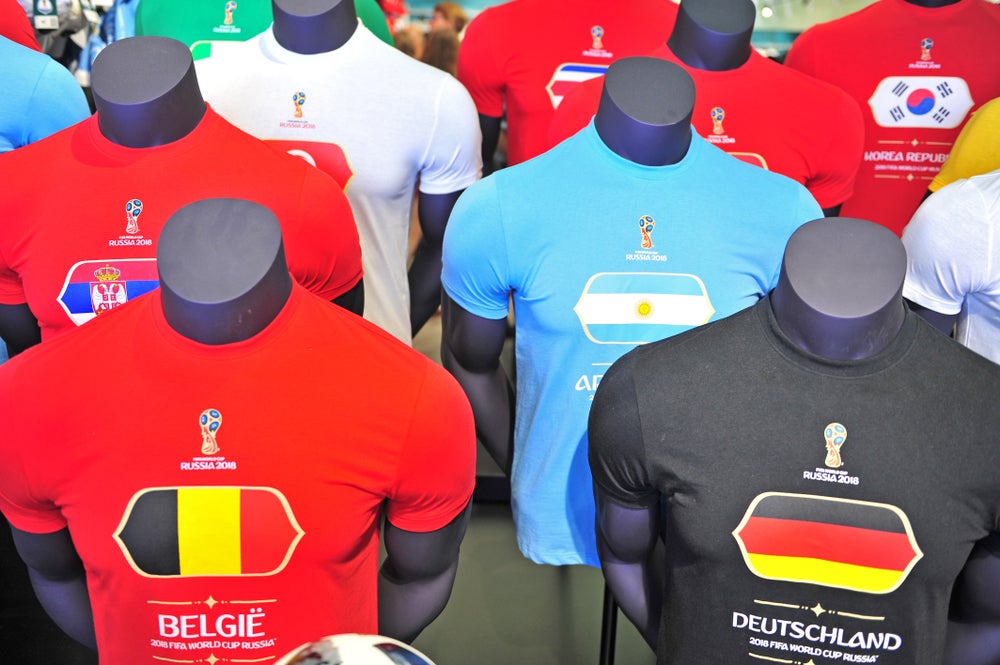
A UK operation that seized counterfeit football shirts worth an estimated £18.5m highlights a growing challenge for retailers: removing online listings alone may not be enough to disrupt increasingly sophisticated counterfeit networks.
A major UK crackdown on counterfeit football shirts has highlighted a wider challenge for retailers and brands: how to move beyond removing individual listings and tackle the networks behind illegal goods.
The nationwide operation, led by the Police Intellectual Property Crime Unit (PIPCU) at the City of London Police, removed more than 220,000 counterfeit World Cup shirts from sale.
The action resulted in six arrests by PIPCU and other police forces, with investigations continuing.
Police worked alongside the UK Intellectual Property Office, Border Force, Trading Standards, rights holders and e-commerce businesses, demonstrating the growing importance of cooperation as counterfeit goods move across online marketplaces, social commerce and physical retail channels.
While the operation disrupted a significant volume of counterfeit products, intellectual property specialists say it also raises a broader question for retailers: should success be measured by the number of listings removed, or by whether brands can identify sellers, supply routes and wider distribution networks?
Why online takedowns are only a temporary fix
Removing counterfeit listings remains an important part of brand protection. It can quickly prevent consumers from purchasing illegal products, particularly where activity is limited to a small number of listings.
However, counterfeit sellers are becoming increasingly effective at moving between online marketplaces, social media platforms and live-shopping channels.
When one account is removed, another can quickly appear.
“Removing a listing is often the quickest way to stop a counterfeit product being seen by consumers,” said Emma Pitcher, partner at European intellectual property firm Boult.
“The difficulty is that it is only a very short-term fix and will do very little to address the root cause and stop the person selling it elsewhere.”
Pitcher described enforcement as a “game of cat and mouse”, with sellers repeatedly adapting their approach to avoid detection.
Research commissioned by HM Revenue and Customs (HMRC) found that businesses with established anti-counterfeiting programmes often described enforcement as “whack-a-mole”.
Some brand protection teams also reported pressure to meet monthly takedown targets, even when investing more time in investigating major sellers could produce stronger long-term results.
For retailers and brands, a high number of removed listings may show active protection of intellectual property. However, it does not necessarily mean fewer counterfeit goods are reaching consumers.
More meaningful measures of success may include identifying repeat offenders, intercepting shipments and uncovering how counterfeit products are sourced and distributed.
Counterfeit enforcement is becoming a supply chain challenge
As counterfeiters exploit multiple sales channels, enforcement is becoming as much a supply chain intelligence challenge as an online marketplace issue.
Experts say retailers should avoid treating every counterfeit listing as an isolated incident.
Repeated product images, contact details, payment information and fulfilment arrangements can reveal connections between apparently separate seller accounts.
Test purchases can also provide valuable evidence about packaging, dispatch locations and wider distribution networks.
“The decision is whether to remove the listing immediately or preserve the evidence and investigate further,” Pitcher said.
The right response depends on the scale of the activity, the available evidence and whether the seller appears to be part of a wider operation.
An isolated listing may require only a marketplace report. But repeated activity, connected accounts or large volumes of stock may justify a broader investigation or involvement from enforcement authorities.
Customs action can also provide valuable intelligence.
“A shipment can provide evidence that connects an online seller with an importer or a wider distribution operation,” said Connor Thorogood, partner at Boult.
“That information may be far more valuable than removing another individual advert.”
For retailers and brands with limited enforcement budgets, the challenge is deciding where resources can have the greatest impact.
In many cases, identifying the source of counterfeit goods and disrupting supply routes can deliver greater long-term value than repeatedly removing individual listings.
Clear responsibilities support stronger enforcement
The operation also highlights the importance of clear responsibilities between rights holders, manufacturers and licensing partners.
Football shirts often involve multiple commercial parties, including clubs, sportswear manufacturers and licensing partners.
Clear contractual arrangements are therefore essential to ensure each organisation understands its role in investigating infringements and taking action.
“It is important to have clear contractual obligations in place so each party, whether they be the rights owner, the licensee or the manufacturer, knows who is responsible for enforcement,” Thorogood said.
Experts also caution against treating every imitation product as a counterfeit.
“The word ‘counterfeit’ is often used for any cheaper imitation, but that is not always legally accurate,” Thorogood said.
A product carrying copied trade marks and being presented as genuine is different from an unbranded product that simply resembles an official item.
Different types of unofficial merchandise may involve different intellectual property rights, including trade marks, copyright and design protections.
For brands and retailers, identifying which rights have been infringed is a critical first step in deciding how to respond.
The future of counterfeit prevention
The UK football shirt operation demonstrates the value of cooperation between rights holders, e-commerce businesses and public authorities.
It also reflects a broader shift in retail, as counterfeit sellers increasingly move between online platforms, social commerce and physical sales channels.
For retailers, the lesson is clear: effective brand protection is no longer measured by how many counterfeit listings disappear.
Increasingly, success depends on identifying the people, supply chains and distribution networks behind counterfeit goods.
“Brands should not judge the success of their strategy by removals alone,” Pitcher said.
“The more useful result is often finding the stock, understanding the supply route and identifying the people behind the accounts.”