

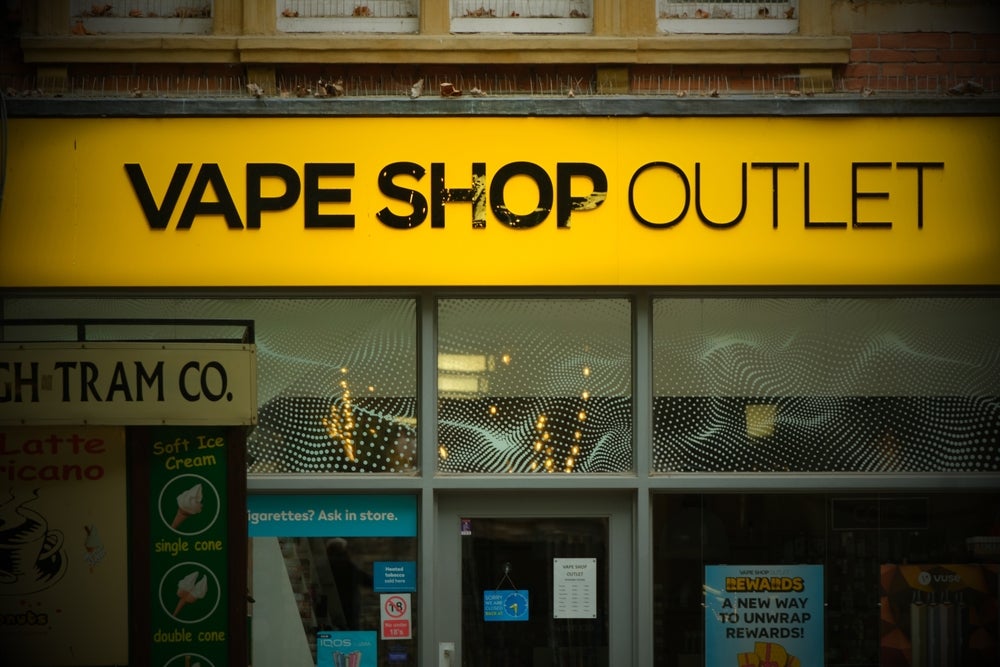
The UK government is giving councils in England greater powers over vape shops, betting shops and adult gaming centres as part of reforms aimed at changing the mix of businesses on struggling high streets.
The measures will give local authorities more control over concentrations of certain businesses, alongside powers intended to bring vacant premises back into use and tougher enforcement against illegal high-street trading.
For retailers and commercial property owners, the reforms will make local planning and licensing policies a more important consideration when assessing high-street locations and prospective tenants.
Councils get new powers over vape shops
The government plans to strengthen councils' ability to prevent new vape shops from opening where there is already a high concentration of such businesses, including in areas close to schools.
The proposals build on measures designed to give local authorities greater control over high-street development and the use of vacant commercial premises.
The government has pointed to an area of Manchester where 51 vape shops are located across two streets as an example of what it considers an excessive concentration. While acknowledging that vaping can help smokers quit, it argues that such clusters can exceed local demand.
The planning changes come as vape retailers prepare for new tax and compliance requirements.
From 1 October 2026, Vaping Products Duty will apply to vaping liquid at a flat rate of £2.20 per 10ml, regardless of whether it contains nicotine. Liable vaping products released onto the UK market from that date will also need to carry a vaping duty stamp.
Retailers can continue to store and sell qualifying unstamped products produced or imported before 1 October 2026 until 31 March 2027. From 1 April 2027, vaping products outside duty suspension in the UK will need to carry a duty stamp.
HM Revenue & Customs has advised retailers to review their stock and speak to suppliers ahead of the October deadline. From 1 October, businesses buying new stock will need to check that products carry a vaping duty stamp where required.
The new planning powers will therefore arrive as specialist vape retailers are already adapting to changes affecting the sourcing, taxation and sale of their products.
Betting shops face tighter local controls
Betting shops and adult gaming centres are also included in the government's high-street reforms.
The proposals would give councils greater scope to reject applications for new gambling premises and respond to concentrations of betting shops and gaming centres in particular areas.
As part of the changes, the government plans to remove the existing “aim to permit” approach under gambling legislation, which limits councils' ability to reject applications that meet licensing requirements.
The changes are intended to increase local discretion rather than impose a blanket ban on betting shops.
Small-business representatives have welcomed the broader focus on local involvement in shaping high streets.
Michelle Ovens CBE, CEO and founder of Small Business Britain, said: “High streets thrive when they are shaped by the small businesses and people who know them best.”
Ovens said support for keeping high streets “well-maintained, diverse, and vibrant” could benefit local communities and help attract spending.
The measures form part of a wider shift towards giving councils more influence over how town-centre properties are used.
Local authorities already have powers to hold rental auctions for qualifying commercial properties that have remained vacant for extended periods in designated high streets and town centres. The mechanism is intended to bring empty properties back into use where landlords have not secured tenants themselves.
For retailers considering new sites, the reforms could make local planning and licensing policies more significant alongside factors such as rent, footfall and customer demand.
Commercial landlords will also need to consider whether prospective uses for vacant units are affected by local restrictions as councils take a more active role in determining their town-centre business mix.
Business rates and enforcement measures expand
The planning and licensing changes form part of a broader government programme covering business rates, vacant properties and enforcement against illegal high-street activity.
Eligible retail, hospitality and leisure properties in England have been subject to lower business-rates multipliers since April 2026. The government is also reviewing the business-rates system as part of its approach to supporting high streets.
Ovens said high streets remain “essential to local communities” and play an important role in the UK's small-business economy. She also argued that maintaining a diverse mix of businesses can support local employment and economic activity.
Alongside the tax measures, enforcement is being stepped up against businesses suspected of activities including tax fraud, money laundering, illegal working and the sale of illicit goods.
A £30m government programme is funding an enhanced law-enforcement response to organised crime on high streets over three years. It includes a new multi-agency operation involving the National Crime Agency and enforcement activity targeting businesses such as vape shops, mini-marts, barbers and sweet shops where there are suspected links to criminal activity.
The government estimates that at least £12bn in criminal cash is generated in the UK each year, with about £1bn laundered through high-street businesses.
Closure orders can currently be used to shut premises associated with serious nuisance, disorder or criminal behaviour for up to six months. The government plans to double the maximum duration to 12 months, with regulations expected to be introduced following consultation.
HM Revenue & Customs is also planning more than 30,000 high-street interventions during the 2026-27 financial year as it increases action against tax fraud and illegal activity.
Taken together, the measures give local and national authorities a greater role in determining how high streets operate. Retailers assessing new locations will increasingly need to consider local planning and licensing policies alongside established commercial factors.
For property owners, the reforms could also influence the permitted uses of vacant units as councils gain greater control over the mix of businesses operating in town centres.