
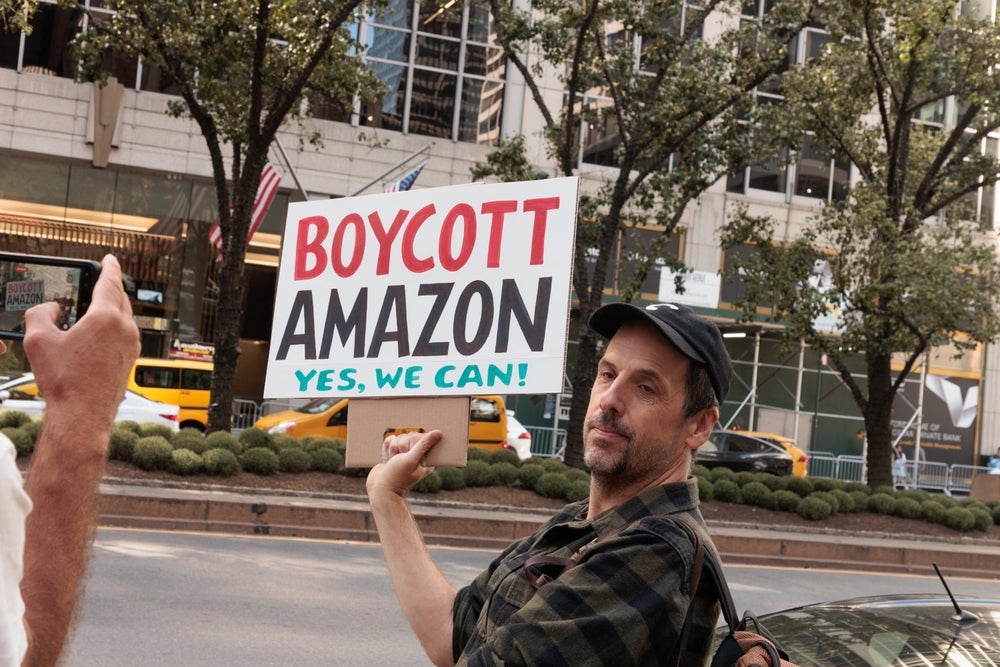
Calls to boycott Amazon have intensified across 2025 and into 2026, driven by deeper scrutiny of the retailer’s role in labour practices, corporate governance, market power and wider social issues.
Activists, unions and consumer groups are promoting coordinated actions and alternative shopping behaviours as they question Amazon’s impact on workers, competition and global retail dynamics.
These movements are gaining attention beyond social media and protest spaces, reflecting broader debates about the responsibilities of major online platforms in the retail sector.
Concerns over labour conditions and corporate responsibility
Retail industry observers and advocacy groups highlight working conditions in Amazon’s warehouse and fulfilment network as a significant factor in boycott campaigns.
Reports from independent sources indicate that injury rates among fulfilment centre staff have been higher than average for comparable industries, alongside claims about demanding performance targets and limited break times.
These issues have been raised repeatedly by unions and worker rights organisations as emblematic of systemic labour challenges at large e-commerce firms.
The #MakeAmazonPay campaign and related actions have drawn together international labour groups calling for improved pay and safety standards.
Protests and strikes have been staged around key shopping events such as Black Friday, with organisers urging shoppers to rethink their purchasing decisions and support fairer working conditions.
Political influence, social responsibility and tech controversies
Some boycott actions reflect broader political and ethical critiques of Amazon’s business ties and public positioning.
Advocacy groups have targeted corporate decisions perceived as rolling back diversity, equity and inclusion (DEI) initiatives, linking these shifts to wider discussions about corporate social responsibility in global markets.
Amazon’s cloud computing arm, Amazon Web Services (AWS), has also been the subject of activism relating to controversial government contracts.
The multi-year cloud services deal known as Project Nimbus involving Israeli government entities has drawn internal opposition from some current and former employees, who argue such contracts raise ethical concerns about surveillance and military applications of technology.
Public debate has also focused on high-profile corporate donations and affiliations with policy agendas in the United States. Critics say such actions may influence perceptions of neutrality for multinational businesses operating in diverse political environments.
Market dominance, tax and environmental criticisms
Beyond labour and political issues, critics of Amazon’s business model argue that its scale and market influence can disadvantage smaller retailers.
Regulatory scrutiny and legal challenges in the UK and EU have drawn attention to algorithmic practices that may favour Amazon’s own products or services, raising questions about fair competition in online marketplaces.
Campaigners also emphasise tax practices and environmental impacts as part of boycott rationales.
Independent research has called attention to the gap between Amazon’s reported revenues and the relatively low levels of corporation tax paid in some jurisdictions, prompting criticism that the company is not contributing proportionately to public finances.
Environmental critics note that rapid delivery expectations, packaging waste and expansion of data infrastructure contribute to carbon emissions and waste management challenges.
While Amazon has made pledges to increase sustainability, some observers contend that its environmental footprint remains significant compared with industry peers.
Ultimately, these evolving campaigns illustrate how consumer sentiment around purchase behaviour, corporate ethics and retail power is becoming more nuanced.
For global retailers and industry stakeholders, the discussion about ethical sourcing, labour standards and digital platform governance is likely to remain a strategic consideration in the years ahead.