
Customer behaviour has already become omnichannel. Retail operations have not always kept pace.
A shopper may discover a product on a phone, check its availability online, buy through an app and return it to a store. To the customer, these are not separate channels. They are different parts of the same shopping journey.
This is changing what omnichannel retail means. A website alongside a store network is no longer enough. Orders, payments, inventory, customer information and returns increasingly need to work across those environments without creating extra effort for the shopper.
Buy online, return in store, often known as BORIS, provides a clear example. A customer can return an ecommerce purchase at a physical store instead of sending it back through a parcel network. The proposition is simple. Making it work reliably is not.
Returns make this challenge commercially important. The US National Retail Federation (NRF) and Happy Returns estimated that 19.3% of online sales would be returned in 2025. Their research also found that 71% of consumers would be less likely to shop with a retailer again after a poor returns experience.
A reliable cross-channel returns service therefore depends on more than a flexible returns policy. Order records, payment systems, point-of-sale technology and inventory data need to recognise the same transaction. Store employees need access to the relevant information, while returned products need to enter the correct inventory and reverse-logistics process.
For retail leaders, this represents a broader shift. The competitive question is becoming less about how well individual channels perform and more about how effectively the entire retail operation works as one.
Omnichannel retail is becoming one customer journey
Retail was traditionally organised around distinct routes to market. Stores had their own stock, sales targets and technology. Ecommerce developed as another operation, often with separate teams, fulfilment processes and commercial priorities.
Customers have little reason to respect those boundaries.
A shopper who has bought online expects the retailer to recognise the transaction when something needs to be exchanged or returned. A customer checking stock before travelling to a store expects that information to be dependable. Someone collecting an online order does not want to discover that the digital and physical sides of the business operate according to incompatible processes.
Retailers have been moving towards integrated shopping journeys for years through services such as click and collect and cross-channel returns. What has changed is the importance of making these services work consistently across the organisation.
For many retailers, this is pushing the omnichannel model towards what is increasingly described as unified commerce.
The distinction is useful. Omnichannel connects customer touchpoints; unified commerce connects the data, systems and processes behind them.
In a unified model, a store colleague can identify an eligible online order without asking the customer to contact an ecommerce team. A returned product can be reflected accurately in inventory. Refund information can reach the appropriate payment system. Customer service can see the transaction and what has already happened to it.
For the shopper, none of this integration should be visible. Its value lies in making the underlying complexity disappear.
Retailers are already investing in the infrastructure needed to support this model. Deloitte's 2025 retail industry outlook found that a third of retail executives surveyed planned significant investment in areas including accurate, real-time inventory visibility, a single view of customers across channels and multiple fulfilment options.
As these capabilities develop, physical stores take on a broader role.
Depending on the retailer's operating model, stores can support collection, returns, exchanges, fulfilment and customer service alongside conventional sales. A store processing an online return is contributing to the wider customer relationship even when the interaction does not produce a traditional store sale.
That has implications for performance measurement. Metrics based mainly on sales through the till may not capture the full contribution — or cost — of a location that increasingly forms part of the retailer's ecommerce infrastructure.
Retailers may therefore need to assess store activity across collections, returns, exchanges and fulfilment as well as direct sales. The aim is not necessarily to replace existing store metrics, but to recognise that the role being measured has changed.
Buy online, return in store exposes operational gaps
Returns are one of the quickest ways to expose weaknesses in a fragmented retail model.
Consider a customer who buys a product online and takes it to a nearby store. The employee receiving it may need to confirm when and where it was purchased, establish whether it is eligible for return, identify the payment method and process the correct refund.
The retailer then has another question to answer: what happens to the product?
If it can be sold again, inventory needs to reflect its new location and condition. If it requires inspection, repackaging, repair or another form of processing, it needs to follow a different route. Some products may need to return to a warehouse, supplier or specialist processing centre.
When systems are disconnected, each stage can introduce manual work, delays and errors. A service designed to make returns more convenient can instead create queues for customers and additional administrative work for store employees.
A successful buy online, return in store service therefore depends on connected order, inventory and point-of-sale systems. Employees need to be able to find transactions and process eligible returns without relying on separate systems or manual checks.
Inventory accuracy is particularly important.
A returned item is not automatically available stock. It may need to be inspected before being put back on sale, or it may be unsuitable for immediate resale. Retailers need clear rules determining how each outcome is reflected in inventory.
Otherwise, an omnichannel returns programme can create a damaging gap between what the system says is available and what can actually be sold.
The economics matter too. An in-store return can remove the need for an individual customer return shipment, although the product may still need to move through the retailer's reverse-logistics network.
Convenience does not remove the cost of processing returns. Employees still need time to receive and inspect goods. Products may need to move between locations. Refunds affect revenue, while damaged, seasonal or time-sensitive products can lose value quickly.
These pressures are making returns a management priority. NRF and Happy Returns' 2025 research found that 64% of merchants surveyed considered updating their returns process within the following six months a priority. Processing costs and carrier shipping costs were among the reasons retailers gave for charging for some returns.
The objective should not be to offer every possible return route. It should be to create a returns model that is convenient for customers while remaining operationally and economically sustainable across channels.
Returns can also provide information about problems elsewhere in the customer journey.
High return rates may indicate unclear product information, inconsistent sizing, inaccurate descriptions or a mismatch between the online presentation and the product received. Analysed by product, category and return reason, returns data can help retailers identify recurring problems rather than treating each return as an isolated transaction.
That makes returns data relevant to merchandising, product content, fulfilment and customer experience as well as reverse logistics.
The return is therefore more than the end of a transaction. It can provide evidence about what went wrong earlier in the journey.
How unified commerce is changing the role of stores
The disappearance of channel boundaries does not mean physical and digital retail have become identical.
Stores still provide immediate access to products, human assistance and physical interaction. Ecommerce offers reach, searchability and convenient remote purchasing.
The opportunity is to allow each part of the retail operation to support the others.
That starts with reliable information. Retailers need an accurate view of orders and inventory across the organisation. Employees need access to the information required to serve customers without moving between unnecessary systems. Returns policies need to reflect what the operation can deliver consistently.
Technology, however, is only part of the transition.
Store incentives and performance measures also matter. Employees may increasingly spend time handling activity generated by another sales channel. A store processing large numbers of ecommerce collections and returns can carry operational costs that conventional store metrics may not capture.
This creates an important management challenge: how should retailers measure the contribution and cost of a store that serves customers across channels?
A location may support an online sale through collection, facilitate an exchange, receive an ecommerce return or help a customer who later completes a purchase digitally. Looking only at transactions completed at the till can provide an incomplete picture of that activity.
Ownership is another issue. If ecommerce, stores, supply chain, customer service and finance operate according to conflicting objectives, a seamless omnichannel customer experience can remain difficult even when the technology is capable of supporting it.
Retailers should therefore examine the complete customer journey rather than treating individual channels as separate optimisation problems.
Can customers see dependable stock information before travelling? Can employees access online orders in the store? Can an eligible purchase be exchanged without unnecessary steps? Does a returned item re-enter available inventory at the right point? Can customer service see what has already happened?
These are practical tests of omnichannel retail because they reveal whether integration works when the customer actually needs it.
The same principle applies as new retail interfaces and fulfilment options emerge. Adding another customer touchpoint has limited value if it creates another disconnected pool of orders, inventory or customer data.
Unified commerce is therefore less about predicting the next retail channel than building an operating model capable of adapting to changing customer behaviour.
From separate channels to one retail operation
The shift towards unified commerce is ultimately a change in perspective.
Retailers may still need specialist ecommerce, store, logistics and technology teams. Customers, however, increasingly experience their output as a single brand.
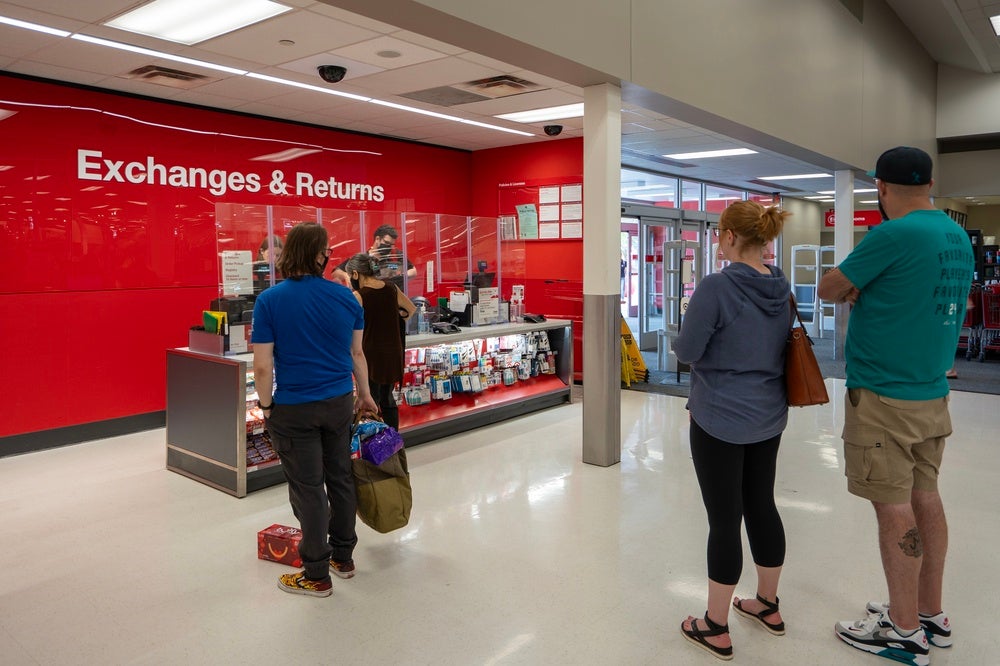
A shopper standing at a returns counter does not care which internal division owns the original order. The expectation is simpler: the retailer that sold the product should be able to recognise the purchase and deal with it efficiently.
That makes buy online, return anywhere more than a customer-facing promise. It is a practical test of whether a retailer has connected its orders, inventory, payments, stores and returns around the customer.
The most successful omnichannel retailers will not necessarily be those with the greatest number of channels. They will be those that make the channels they already have work together so effectively that customers no longer need to think about where a transaction started or where it ends.
The real change is not that retailers are adding more channels. It is that channels are becoming less meaningful to customers.
As that distinction continues to fade, the retailers best placed to compete will be those that make the entire shopping journey feel like one retail experience.