

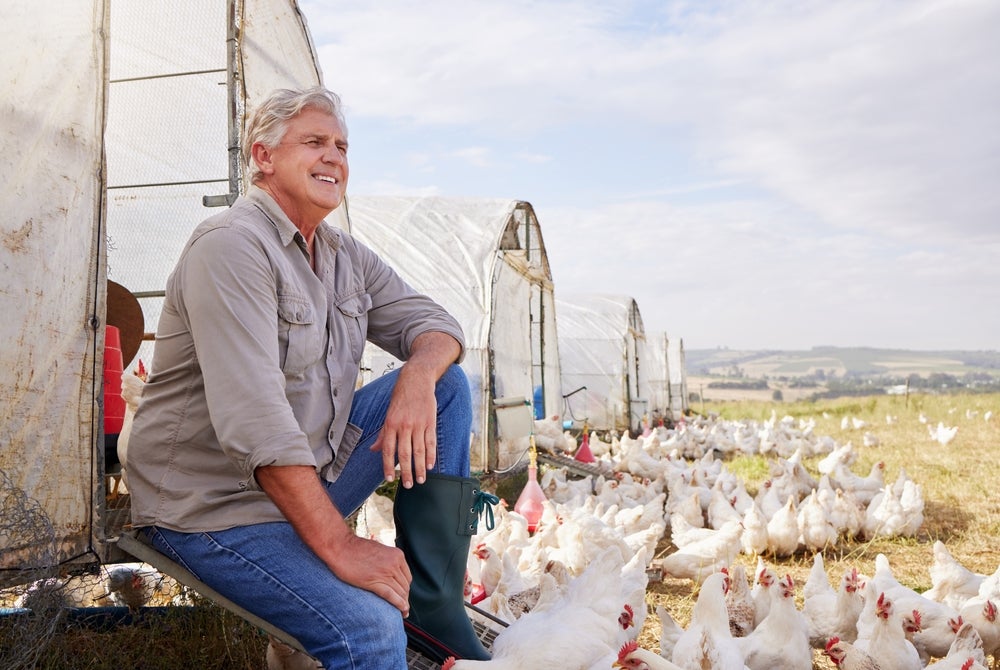
Efforts to improve the welfare of chickens raised for meat are gaining momentum across Europe’s food industry.
A new report, ChickenTrack 2025, shows that retailers and some hospitality operators are making progress towards meeting the Better Chicken Commitment, a set of welfare standards designed to improve conditions for broiler chickens in the food supply chain.
The annual ChickenTrack report is published by Compassion in World Farming. It tracks how major food companies are implementing the Better Chicken Commitment, which sets requirements for how chickens are bred, raised and processed.
Across Europe, more than 410 companies have signed the commitment.
The 2025 report evaluates 107 major signatories, including retailers, food manufacturers, restaurant groups and hospitality operators. Together, these companies could influence the welfare of more than 794 million chickens each year.
The latest findings show that 163 million chickens are already benefiting from welfare improvements introduced by companies over the past year. However, progress remains uneven across the industry as the 2026 implementation deadline approaches.
What the Better Chicken Commitment requires
The Better Chicken Commitment is a science-based framework developed to improve welfare conditions for broiler chickens raised for meat. It focuses on several key factors that affect how birds are raised on farms and processed for food.
The commitment requires companies to meet standards including:
- Lower stocking density, which means fewer chickens per square metre in housing
- Slower-growing chicken breeds, which reduce health issues linked to rapid growth
- Natural light and environmental enrichment, allowing birds to move and behave more naturally
- Controlled atmosphere stunning, a processing method designed to reduce stress before slaughter
Many retailers, restaurants and food service companies have pledged to meet these requirements by 2026, making the framework an important reference point for poultry sourcing policies across the retail and hospitality sectors.
Retailers lead progress across welfare criteria
ChickenTrack 2025 shows stronger progress among several retailers and food companies.
UK supermarket Waitrose moved from 14% to 100% compliance on breed transition within one year, demonstrating that a full shift to slower-growing chicken breeds can be achieved within a commercial supply chain. Norwegian retailer REMA 1000 Norge AS also reached full compliance ahead of the deadline.
Progress has also been recorded across several individual welfare criteria:
- Natural light: 10 companies fully compliant
- Environmental enrichment: 9 companies fully compliant
- Controlled atmosphere stunning: 8 companies fully compliant
Several companies, including Cortilia, Eataly Italy, Groupe Casino, Big Mamma France and Premier Foods, reported 50% or greater progress across all key on-farm criteria, including breed transition, stocking density, natural light and enrichment.
Transparency is also improving. 76 companies reported progress in the 2025 report, up from 64 companies in the previous year.
Breed transition and hospitality commitments remain challenges
Despite progress in several areas, the shift to slower-growing chicken breeds remains the most difficult requirement for many companies.
Thirty-six companies report less than 10% progress on breed transition, while 17 companies report no progress at all. Some large food service operators fall into this category.
Breed transition is considered central to improving broiler welfare. Conventional fast-growing breeds can experience health problems linked to rapid growth, meaning other improvements, such as lower stocking density or better lighting, may have limited impact without breed change.
The report also highlights uneven engagement across the hospitality sector. Thirty-one companies included in the assessment did not report progress, many of them food service operators.
In addition, 18 UK brands recently withdrew from their Better Chicken Commitment pledges, citing operational challenges linked mainly to breed transition.
Calls for clearer industry roadmaps
The report urges companies in the retail, hotel, restaurant and food service sectors to publish clear implementation plans for meeting the Better Chicken Commitment.
Eight additional companies released public transition roadmaps during the past year, bringing the total to twelve. These plans outline how businesses intend to adjust sourcing and supply chains in order to meet welfare standards.
As the 2026 deadline approaches, the report suggests that continued progress will depend on stronger transparency, supplier collaboration and long-term sourcing strategies.
For hotels, retailers and hospitality operators purchasing poultry products, ChickenTrack 2025 highlights the growing role of animal welfare standards in food supply chains, alongside increasing expectations for accountability and responsible sourcing.