

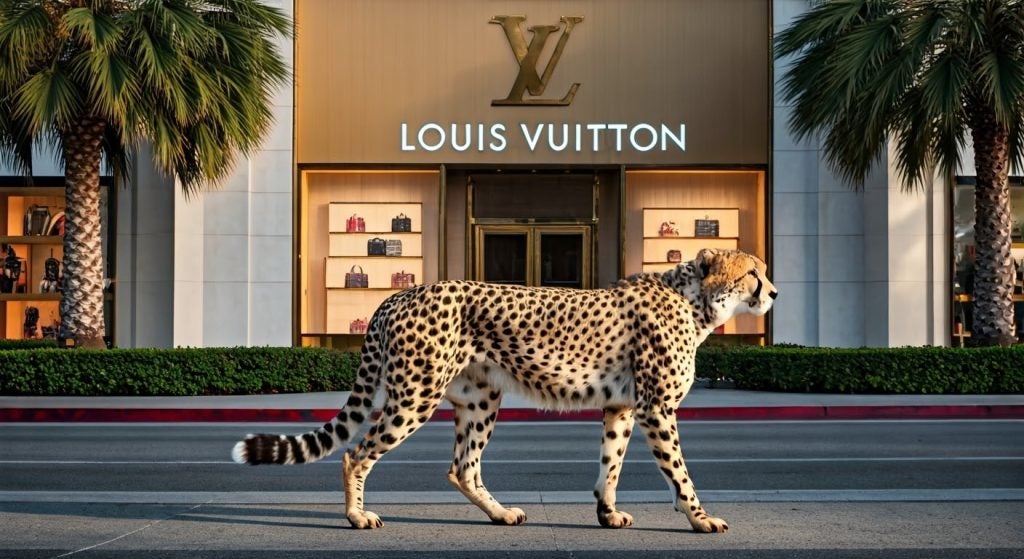
Weaker Chinese demand is putting European luxury brands under pressure, sharpening the focus on pricing, product mix and international investment.
LVMH’s fashion and leather goods sales fell 5% organically in the third quarter of 2026 as weaker Chinese demand weighed on Louis Vuitton and Dior.
Although group revenue rose 1% to €18.5bn, the contrasting results expose the uneven recovery in luxury retail and intensify pressure on brands to rethink pricing, product mix and international investment.
According to results published on 12 October, LVMH recorded growth in the United States, Europe and Japan, although this was not enough to offset weakness in its core fashion and leather goods division.
Organic growth excludes the effects of currency movements and changes in the scope of the business.
For retail executives, the challenge is to identify resilient sources of demand while reassessing pricing, inventory and investment in weaker markets.
Market value losses underline recovery concerns
Investor confidence has also weakened.
Reuters reported on 13 October that the ten companies in the STOXX Europe Luxury 10 index had lost around $350bn in combined market capitalisation since the beginning of 2026. LVMH’s shares had fallen by more than 40% over the same period.
These losses reflect changing expectations for future earnings and growth, alongside wider market conditions. They should not be confused with operating performance: a fall in market capitalisation does not represent an equivalent reduction in retail sales.
LVMH’s results also show significant differences between business divisions. Selective retailing, which includes Sephora, recorded 8% organic growth in the third quarter, while watches and jewellery grew by 6%.
This divergence makes broad assumptions about luxury demand less useful for commercial planning. Retailers need to assess performance by brand, category and customer group before adjusting purchasing or investment plans.
Chinese spending is shifting across markets
China’s slowdown extends beyond one company’s quarterly results. Bain & Company estimates that mainland China’s personal luxury goods market contracted by 3–5% in 2025, following a decline of 17–19% in 2024.
The smaller contraction indicated some stabilisation, although the market remained under pressure from cautious consumer spending.
Where consumers spend also matters to retailers worldwide. Bain estimates that 65% of Chinese luxury consumption took place within mainland China in 2025, while 35% occurred abroad.
Narrower price differences between China and key overseas markets, influenced by currency movements, reduced the incentive for some consumers to shop internationally.
For retailers serving international visitors, domestic demand and tourist spending therefore require separate forecasts. Changes in shopping destinations can affect overseas store sales without an equivalent change in consumers’ overall spending.
Competition is also evolving. China’s secondhand luxury market grew by 15–20% in 2025, according to Bain, although it still accounted for less than 10% of the primary luxury market. The consultancy also identified gains by local Chinese brands in selected categories.
These developments point to a more competitive environment in which established international brands must pay closer attention to product relevance, customer preferences and perceived value.
Pricing requires stronger customer evidence
For retailers, a central question is how much customers remain willing to pay for a particular product and experience.
Conversion rates, repeat purchasing and full-price sell-through can help explain revenue trends. Examining these measures alongside sales volumes and average transaction values can reveal whether growth reflects stronger demand or higher prices.
Possible responses include reviewing entry-price ranges, improving product differentiation and strengthening after-sales support. Each decision should reflect the brand’s positioning and the behaviour of its customers.
Discounting requires particular care where exclusivity supports demand. Frequent promotions can help clear inventory but may also encourage shoppers to postpone purchases in anticipation of lower prices.
Service investment deserves similar scrutiny. Personal appointments, relevant product recommendations and reliable repairs can strengthen customer relationships.
Retention rates and subsequent purchases provide evidence of whether these services contribute to commercial performance.
Inventory and expansion need local discipline
Uneven trading increases the importance of managing stock by product, location and sales channel. Group-level figures can obscure excess seasonal inventory in one market and shortages in stronger-performing categories elsewhere.
Buying teams should combine current sales data with historical performance, customer feedback and local demand forecasts. Transfers between markets may help address imbalances where expected sales justify the transport and handling costs.
The same scrutiny applies to international expansion. Stronger demand outside China may offer opportunities, but new stores require evidence of sufficient customer spending, viable operating costs and a credible path to profitability.
Physical and digital investment should also be assessed together. Online channels can support product discovery and purchasing, while stores provide opportunities for personal service and product engagement.
Understanding how these channels work together can help retailers evaluate their contribution to sales and customer retention.
The next test is whether stronger categories and markets can sustain growth while luxury fashion remains under pressure. Purchasing behaviour, full-price sales and store productivity will be key indicators of whether recovery is broadening and where further adjustments are needed.
For the wider retail industry, LVMH’s results underline a practical lesson: sustainable growth depends not only on where customers spend, but also on what they buy, what they are prepared to pay and how effectively retailers respond when demand changes.